

Trust the Process: Finding Your Own Rhythm
Staying True to the Work You Cannot Help But Do


In 2026, I cannot stop thinking about the importance of process. We live in a culture that is obsessed with the “overnight” story. We are bombarded with images of people who seem to have bypassed the struggle entirely, appearing fully formed with a polished brand and a finished product. It’s enough to make anyone feel behind. When we see a successful writer – or a successful anyone – we often fail to investigate the submerged part of the iceberg. This piece is about investigating what’s underneath the surface.
Today, I want to highlight a few modern authors whose road to success might have looked delusional to the outside world. Whilst they did finally make it to the “top”, it is their journey that I find most inspiring.
Even though I don’t currently have a classroom of students, I still find myself looking at life through the lens of an English teacher. If you are currently teaching young people or have a teenager at home, I think they need to hear these stories. They are so often led to believe that the only path to a creative life is “Harvard or bust,” or that if they don’t get into an elite program like the Iowa Writers’ Workshop by twenty-two, the door is closed (substitute a similar program for another discipline besides writing).
Literary history is full of canonical figures whose rise to fame was anything but glamorous. I often joke that my old DP syllabus would have been significantly shorter if Max Brod (Franz Kafka’s best friend) had actually followed his dying wish to burn his manuscripts. We only have The Metamorphosis because someone refused to let the work disintegrate into flames. And there is the example of John Kennedy Toole, the author of A Confederacy of Dunces, who died never knowing his book would win a posthumous Pulitzer. His mother sent in the manuscript to the publishing house after his death. We all know the J.K. Rowling story – the cafe, the single mother, the global phenomenon. But there are so many more similar stories that are lesser known to the general public. I choose writers because that is my world, but the pattern is universal in sports, science, and art. The backstory is almost always the same: dogged diligence in the dark.
Donna Tartt: A 30 Year Career, 3 Novels

One of my best friends recently finished The Secret History, and we were talking about how it’s truly one of the weirdest, most excellent novels ever. There is a kind of artistic perfection in its craft. That makes sense when you look at how Tartt works. Her debut took nine years. In a 1992 television interview, she sheds light on her process:
Interviewer: How’d you do it?
Tartt: Worked every day. Worked every day for 8 years.
What is most striking about Tartt isn’t just that first decade, but the fact that she never sped up. She has published exactly three novels in thirty years; one every decade. In a world that demands constant content creation, Tartt’s process is a reminder that there are slower, more tactical ways to build a legacy.
Min Jin Lee: The Courage to be an Amateur
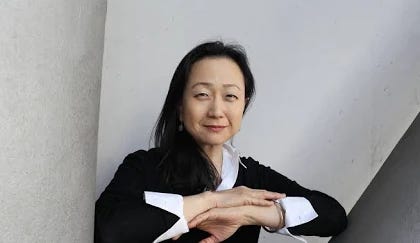
Then there is Min Jin Lee, the author of Pachinko. She walked away from a career as a corporate lawyer in 1995 where she was “great at due diligence” billing 300 hours a month and never leaving the office. Having quit in a spontaneous moment of frustration, she thought that discipline would make her a writer overnight. It didn’t. She tells the story of years of frugality and patience, waiting for her books to become successful.
In reference to the publication success of her novel Pachinko Lee says: “I was so scared I would fail again and it would take a long time,” she admitted in a recent interview with the New York Times. And it did. The novel gained popularity slowly and painstakingly before it became a bestseller.
In the literary world, there is a very specific, polished path: you go to an elite MFA program like Iowa, you find a mentor, and you enter the “stream.” And while there is absolutely nothing wrong with that path as it often produces excellent writers and books – it often makes success feel like an eventual inevitability.
Min Jin Lee didn’t have that. She describes her journey as “the privilege of not having any training.” Unlike Tartt, who was discovered among a legendary circle of writers at Bennington, Lee was a total outsider. She was disconnected from the literary elite. She didn’t even realize she was writing a historical novel because she hadn’t read them as a template. She was just an amateur in the truest sense of the word, figuring it out by reading books and trying to mimic them, following her intuition. She wrote an entire version of Pachinko, realized it didn’t have the right “heart,” and started over. Note: If you haven’t read Pachinko yet, please do. It is easily one of my top three books of all time.
Virginia Evans: The 5am Silence
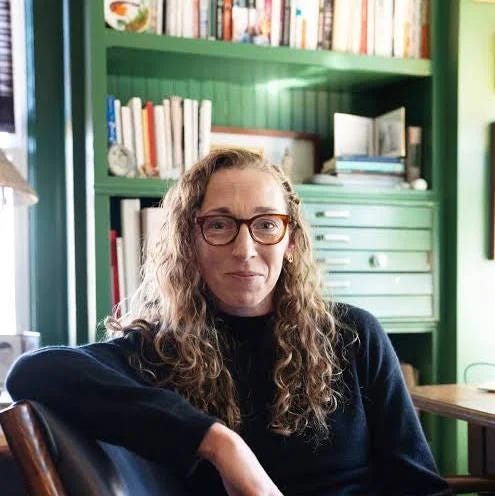
The most recent story that caught my eye is Virginia Evans. I just listened to the podcast episode about her breakout novel, The Correspondent, and I found her story incredibly compelling.
Evans told the interviewer: “I began writing every day from 5am to 7am since I was 19 years old. I’m 44 today.” I am moved by the math of her life. That is twenty-five years of waking up in the dark to talk to herself on paper before the rest of the world started its day.
For years, Evans lived a life that many would call “delusional.” She wrote in a literal closet to find the necessary quiet. While her peers were climbing ladders, she never had a “career” but tells the interviewer that she only had “jobs.” She took work that paid the bills but left her mind free, because in her own heart, she had already chosen her profession. She was a writer; the world just hadn’t found out yet.
Despite her recent, sudden breakout success, she remains refreshingly grounded. She recounted the surreal moment her book hit #1 on the bestseller list in December, noting that her celebration was far from a high-glamour literary party. On New Year’s Eve, she and her family “toasted at 7pm and never made it to midnight.” It is a beautiful image: the most celebrated writer in the country, asleep before the ball dropped, likely because she knew she’d be back at her desk at 5:00 AM.
The Bet
What connects these unlikely success stories? Is it the refusal to stop doing the thing that hasn’t paid off yet? Is it talent? Is it a kind of over-the-top belief in one’s ability to create? Or is it diligent, daily, sometimes-delusional hard work?
If you’re reading this and feeling “behind,” or if you are teaching young people or have a teenager at home who feels the weight of that “Harvard or bust” pressure, I would urge you to look at the arc of these creators’ lives. We often talk about “trusting the process” as if it’s a passive act. But for these women, the process was a high-stakes bet and an arduous, daily grind. They bet their most precious asset – their time – on a version of themselves that didn’t exist yet.
They only had the recurring instinct to do the work.
I keep asking myself: what is the thing I could be doing right now simply because I can’t seem to leave it alone? There is a lot of pressure to be “visible” right now, but most of the work that actually lasts is done by “due diligence” people – the ones who stay at the desk long after the initial excitement has worn off. If you’re in that quiet middle part of a project where it feels like nothing is happening, it’s okay to be slow. The desk will be there tomorrow. Let’s trust the process and find our own version of the 5am grind.
I highly recommend taking an hour this week to listen to the podcast episodes linked above for Min Jin Lee and Virginia Evans. Hearing the actual voices of people who spent decades in the dark is guaranteed to inspire and delight you!
From my pile of books to yours,
Emily
Thank you dear Emily. ❤️